The Optimization Game Inside AI Labs
 Bruce Hart
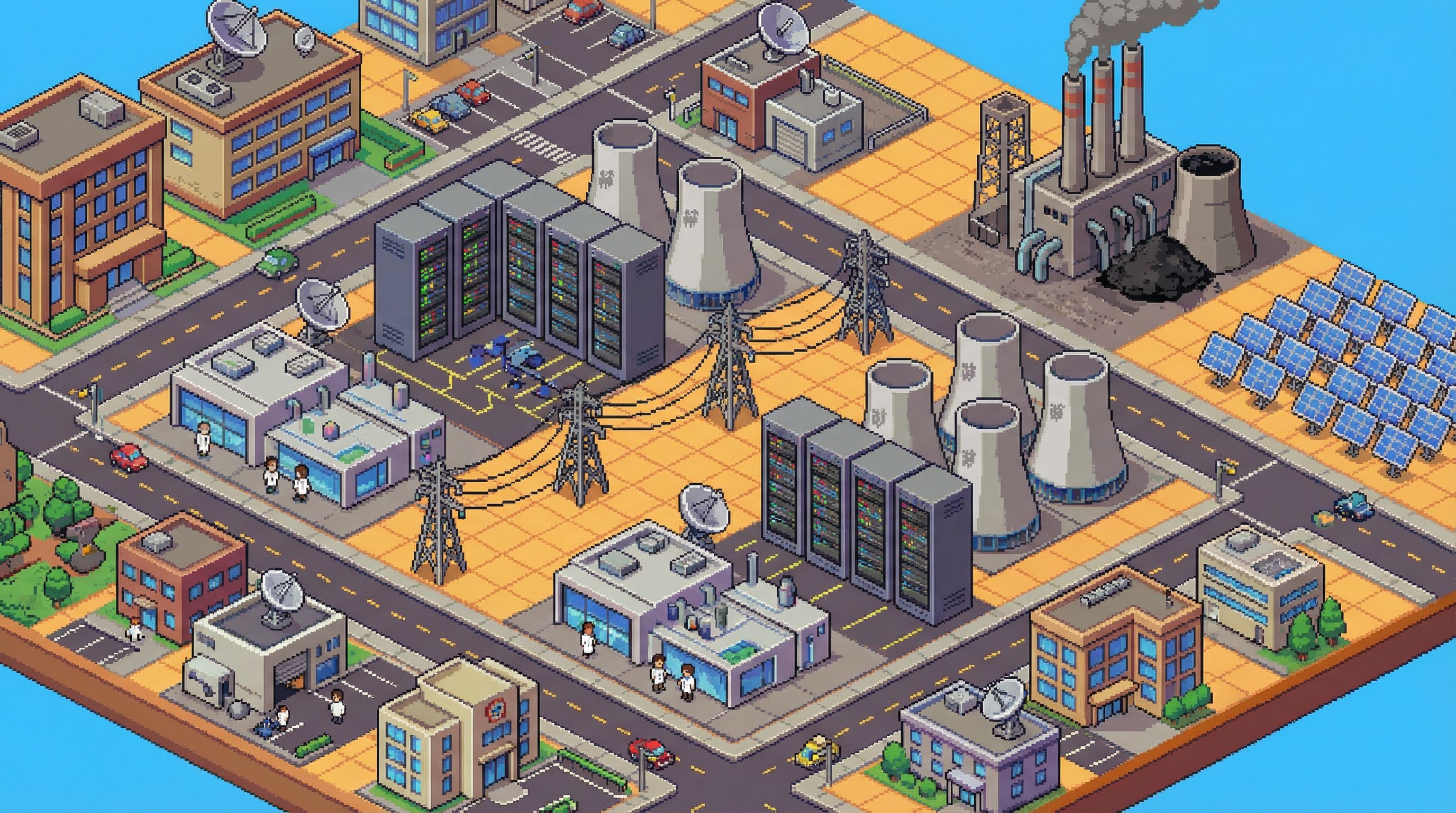
AI labs are playing a strategy game, not a straight-line race.
What looks like “just ship the best model” is actually a messy optimization problem: capital allocation, product cadence, research direction, and hardware availability all constrain each other. The scoreboard is market position, but the board is compute, power, and memory.
The bottleneck is a moving map
It’s not “best model wins,” it’s “best model that you can actually serve wins.”
You can imagine a lab with a state-of-the-art model already trained, sitting behind a launch gate. The missing piece isn’t capability, it’s supportability. If usage spikes, you need the datacenter muscle to keep latency sane and costs sane.
Latency is part of the calculus too. Slow, long-running products like Sora 2 can act as a buffer: you can soak up spare compute when it’s available, then prioritize faster tasks where latency matters more. Same idea for GPT 5.2 Pro and other long-running jobs.
That makes release timing a capacity decision, not just a marketing decision.
Product cadence is a capital allocation problem
CEOs in this space have a massive optimization in front of them: where to put money (training runs, inference fleet, chips), how to sequence releases, and which research paths to prioritize.
Push the frontier too fast and you can’t serve it. Play it too safe and you lose mindshare. The competitive game looks like a chess clock plus a power grid.
I don’t know the exact answer for any lab, but I’d bet many of them have “we could ship something stronger today” on the whiteboard, followed by “do we want that traffic right now?”
Efficiency research is not optional
The other axis is efficiency: better architectures, better inference, tighter memory usage.
It’s not glamorous, but it’s often the difference between a model that exists in a lab and a model that exists in the market. You don’t just need a better model, you need a better model that fits on the hardware you actually have.
That’s why insiders are so excited. There’s real headroom, and they can see it. The gating factor is just the physical world catching up.
This should be a game
All of this makes me want a SimCity-like strategy game for running an AI lab.
You’d juggle release schedules, chip orders, research bets, power contracts, and PR. Make one move too early and your margins collapse. Make one move too late and your rival eats the market.
Call it “Sama” for fun.
We are waiting on concrete and copper
The truth is: lots of the next wave is already built in the ideas, but it needs racks, power, and memory to show up.
So for now, the most interesting part of AI is not just the models, but the operational choreography behind them.