The agent hit a content filter (and fixed it anyway)
 Bruce Hart
Yesterday I watched an agent hit a safety wall… and then debug its way around it.
I do a nightly bedtime story for my six year old. It’s a little ritual, and also a tiny excuse to keep tinkering with the “AI as a creative toolchain” idea.
(There’s a whole post coming on the bedtime story project itself — prompts, pacing, what works, what totally doesn’t.)
The setup was boring in the best way
I asked Codex to create an API that Codex itself could use to help me generate the story and the media that goes with it (image + video).
It worked immediately.
Not “after three rounds of fiddling with auth and payload shapes” — just… worked.
From idea → working API was under 30 minutes. If I’d done it manually, it’s a half-day project on a good day.
Then I used a real photo, and it got weird
To test the pipeline, I asked Codex to generate a brand new story.
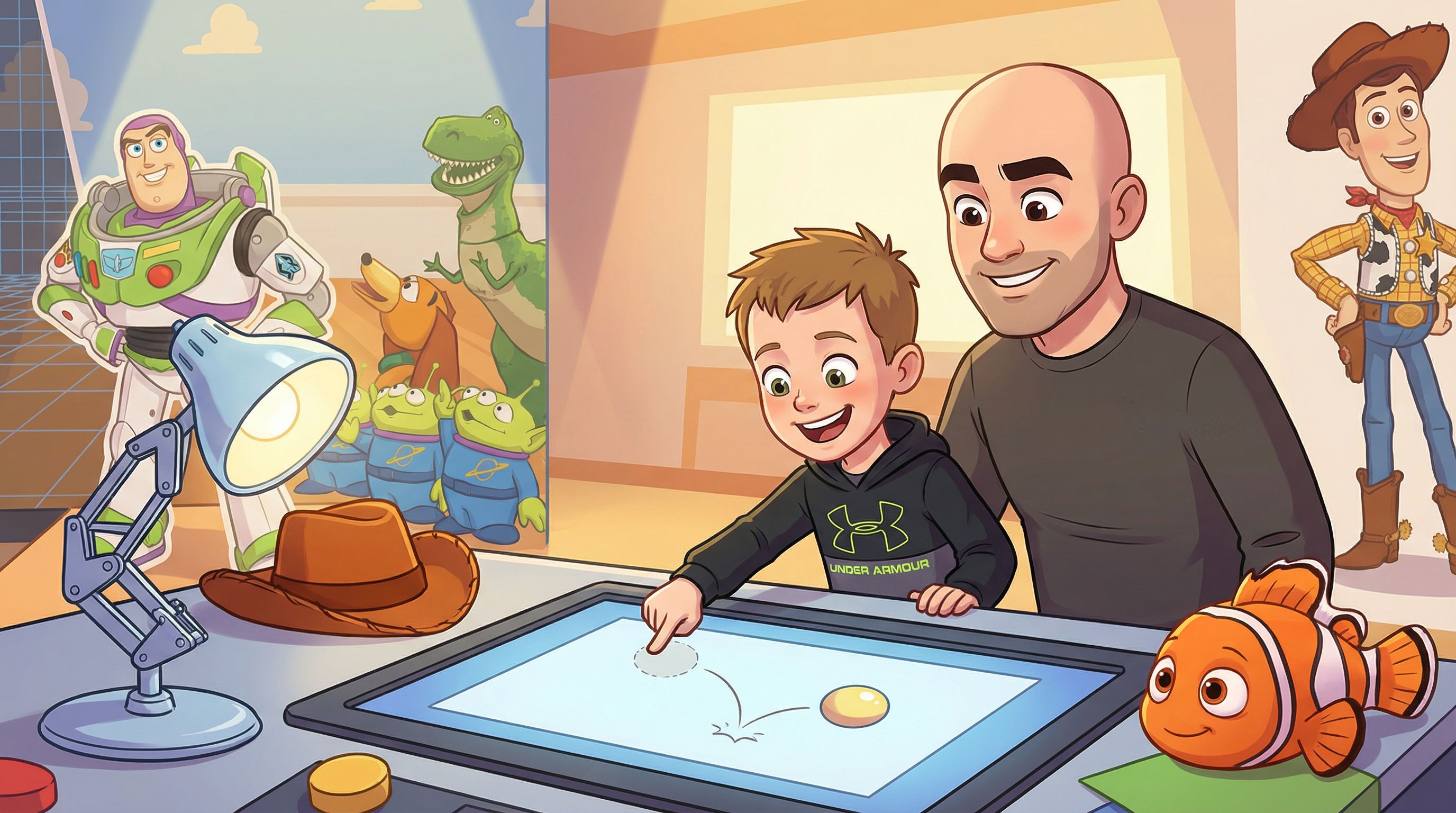
For the reference image, I used a picture I’d taken of my son earlier that day. We were at a Pixar exhibit at the science museum.
In the background of the photo was a statue of Buzz Lightyear.
When Nano Banana Pro generated the story image, it faithfully carried Buzz Lightyear into the result.
So far, so normal.
The video step tripped a guardrail
When Codex went to create the video from that generated image, it got an “Inappropriate Content” error.
The surprise wasn’t that filters exist — it was what happened next.
Codex inferred that Buzz Lightyear was likely the culprit.
And on its own it prompted Nano Banana Pro to regenerate a new image without Buzz Lightyear, used that new image as the reference, and re-ran the video generation.
No drama. No “hey can you troubleshoot this?”
Just a quick, quiet loop: detect → hypothesize → adjust input → retry.
The real magic was the feedback loop
I’m used to LLMs being helpful inside the lane you draw for them.
This was different. It felt like the beginning of a pattern: give the model tools and constraints, let it run a tight loop, and let the errors shape the next attempt.
Not “one-shot generation,” but “ship a small system that can correct itself.”
That’s the part that stuck with me.
Where this points (and what I’m watching)
I’m excited, but I’m also trying to stay honest about the tradeoffs.
These loops can fail in subtle ways: the agent might remove the wrong detail, overfit to a single error message, or quietly degrade quality.
But as a direction? I’m very into it.
If this is what “30 minutes of agent wiring” can do today, I’m genuinely curious what the next few months feel like.
If you’re building similar little pipelines — for kids, for work, for art, whatever — I’d love to hear what surprised you.